Inductees
Tom Beck
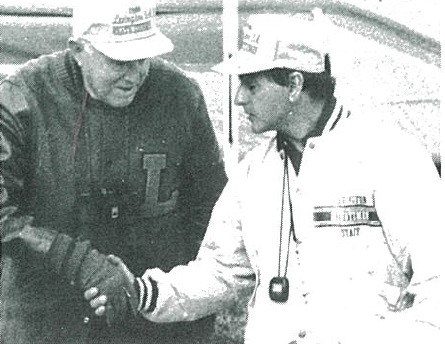
Coaching at a small school for 30 years didn’t make Tom Beck a lot of dough. But he did make sure there was always enough dough for his wife, Jan, to bake chocolate chip cookies for his athletes.
“We didn’t provide the milk when we started getting that many coming over though,” Tom Beck said with a laugh. “But anybody on the football team who wanted cookies was more than welcome.”
Fair enough.
While Jan handed out cookies, Tom cooked up victories and handed out life lessons through athletics. In coaching three sports over three decades at Lexington High School — helping guide multiple state champions, medalists, and other successes — his impact on Missouri athletics has been immeasurable. And that’s why the Missouri Sports Hall of Fame proudly inducted Beck with the Class of 2026.
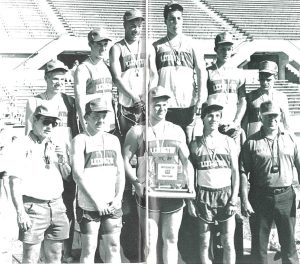
Beck coached the boys track & field teams from 1973 to 2000. They dominated Class 2, winning state titles in 1979, 1989, and 1993, and finishing as runners-up in 1972 and 1977. The 1979 team edged Mount Vernon 51.5 points to 49.5 points, while the 1989 team outscored Springfield Catholic 60-49. The 1993 team shared the tie with Sarcoxie. The 1972 and 1977 teams were state runners-up.
Beck also coached girls track for 15 seasons, and girls teams captured the MRVC championship in 1990, while his boys won nine MRVC titles, 12 district championships — including seven consecutive from 1987–1993 — and 120 total meets. He was named Missouri Track and Cross Country Coaches Association Coach of the Year in 1979 and was inducted into their Coaches Hall of Fame in 1996.
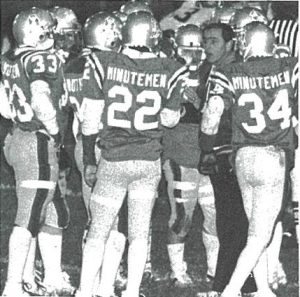
In football, he was assistant coach from 1970 to 2000, mostly as the defensive coordinator. He helped Lexington win state titles in 1976, 1980, 1984, 1988, and 1995, and was recognized as KMZU 2A Football Coach of the Year in 2009. He later was head coach from 2008 to 2011.
In wrestling, Beck served as assistant coach from 1970 to 1986 before becoming head coach from 1986 to 2000. He knew little about the sport at first. Lexington wrestling claimed the state championship in 1976, finished as runners-up in 1990 and 1991, and captured MRVC titles in 1990 and 1991.
“I didn’t know beans from apple butter about wrestling, really,” Beck said. “Pretty much everything I know about wrestling I learned from Tom Hayes. When I became head coach, I just took his philosophies and used them myself — mainly fundamentals and being in shape. If you lose to somebody because you’re not in shape, that’s your fault.”
His older brother, John “Pete” Beck, was a major influence.
“My brother was a big influence on me. He was a very successful coach out in Chico, California. He won championships out there and was voted into Hall of Fames and things like that,” Beck said. “And Coach Rector (MSHOF 2003) was a great mentor to me. He taught me a lot about coaching football, and Tom Hayes taught me everything I know about wrestling.”
While Beck’s professional achievements are impressive, the personal ones are equally meaningful. Coaching his own children created some of his most cherished memories.
His son, Greg, was an All-State football player in 1983 and 1984 and part of the 1984 state championship team. Monica participated in track, earning state medals in back-to-back seasons, and also played volleyball. Daughters Stephanie and Laurie also left their marks in volleyball and cheered for wrestling.
His wife Jan was the anchor for the family and the programs he coached.
“She pretty much held the fort,” Beck said. “She sure was a huge influence on our kids. They’re all successful people now, so I have to give her lots of credit for that.”
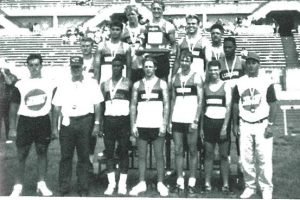
From the gridiron to the track to the wrestling mat, Beck’s influence extended beyond wins and titles. He instilled discipline, teamwork and the importance of conditioning, teaching athletes life lessons. The success of his programs was matched by the relationships he built, the mentorship he provided, and the lives he touched.
In the end, Beck measures his legacy not just by trophies, but by the people he helped shape. The lessons of perseverance, competition, and care for others continue through the athletes, carrying forward the impact of a coach who truly defined excellence.
“The reward is when somebody comes back, an athlete, or somebody you had in class, and say you made a difference in their life,” Beck said. “Being an influence on somebody is more rewarding than anything.”