Inductees
Stan Melton
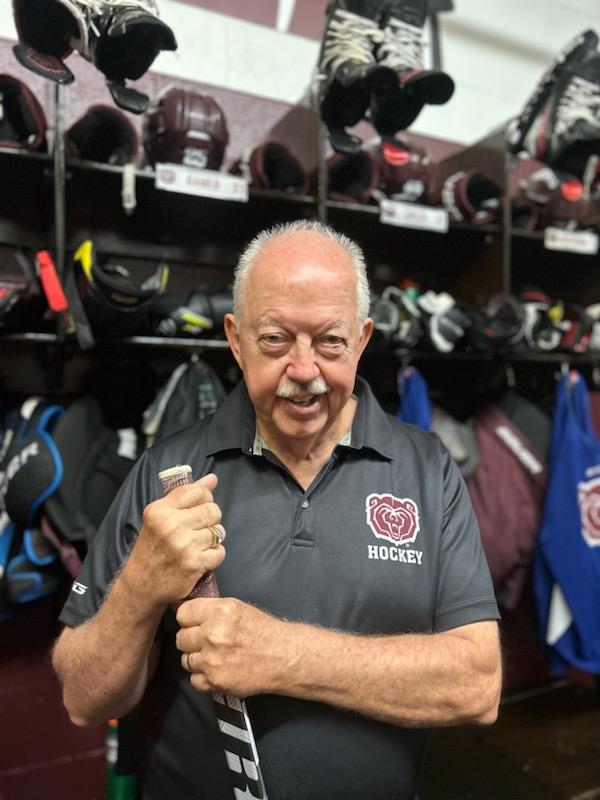
During a milestone anniversary for the Missouri State club hockey team, one of its architects is joining the Missouri Sports Hall of Fame.
It’s been 25 years since Stan Melton helped bring the Ice Bears to life, transforming an idea for a recreational ice facility into reality when Jordan Valley Ice Park opened in 2001.
With the ice rink in place, the longtime hockey fan helped create a club team for then-Southwest Missouri State University. The man who cannot skate well became the first general manager.
Now, thousands of fans watch the Ice Bears play hockey, and the sport has grown throughout the southwest Missouri region thanks to the help of Melton. That is why the Missouri Sports Hall of Fame proudly inducted Melton with the Class of 2026.
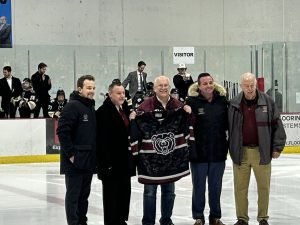
“It is just an amazing honor and I am so pleased to have that recognition and particularly for the sport of hockey here in Springfield and obviously around the state, because it’s a tremendous sport,” Melton said. “I’m just fortunate enough to be involved with it and have a good role in bringing it to Springfield and southwest Missouri.”
Melton spent 24 years as a manager at Mediacom and previously was a Springfield radio news director for three years. He graduated from the University of Missouri with a bachelor’s degree in journalism and mass communication.
The Cassville native saw his first hockey game in 1970, when a friend wanted to see family in Kansas City. His friend’s family had tickets to a game for the Kansas City Blues, a St. Louis Blues affiliate.
“I had never been to a hockey game and didn’t really know a lot about the sport except for the fact that I knew the St. Louis Blues had started, and so we went to the game,” Melton said. “I was just totally fascinated by what I was seeing on the ice. They were doing things that I couldn’t believe you could do on ice skates.”
He started attending hockey games whenever he could, venturing to St. Louis, Kansas City and Tulsa. Road trips led to searching for a schedule to see if a hockey team was in town.
“I just became a strong fan of the sport and wanted to see it come to Springfield,” he said.
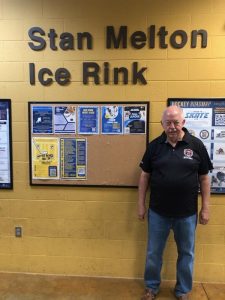
Melton worked with longtime Springfield-Greene County Park Board Director Dan Kinney on the rink project. Citizen surveys in the mid-90s showed an interest. Melton led a citizens’ committee group to advocate for building the rink and, once the funding was in place, Kinney called to say Melton’s dream was becoming reality.
The arena wasn’t large enough for a pro team but, with a 1,100-person main arena capacity, a college hockey team was a great fit. Melton wanted to create the SMS hockey team. He knew Todd Laster, who played club hockey at the University of Kansas and Andy Marquart, a college student writing a class paper on the ice rink project.
“I said, ‘Fellas, I want to start the SMSU Bears hockey team,’” recalled Melton, a 2024 inductee into the Springfield Area Sports Hall of Fame.
Marquart, a Washington native, helped recruit student players from the St. Louis area. Melton became the GM, handling funding the team, marketing and operations, while Laster also provided help. Benjamin Alexander, a city employee in the planning department, became the first head coach. He brought four years of playing collegiate hockey experience from Iowa State. Curt Bussen joined Alexander as the first assistant coach.
The St. Louis University team, St. Louis Sting Jr. team and the St. Louis Blues Alumni visited Springfield for the rink grand opening and played the first Ice Bears squad in September 2001.
As they say, the rest is history. The Ice Bears added a second team in the 2005-2006 season, and now Missouri State has teams in the American Collegiate Hockey Association D-1 and D-III ranks.
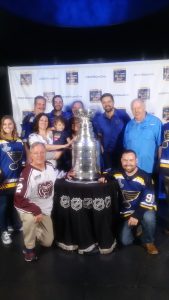
The draw to hockey has increased over the years. Melton said fans’ attendance has risen from 300 to an average of 1,000 fans a game. The Ice Bears Booster Club boasts 150 members, and the Ice Girls Club offers sales and marketing assistance. Overall, the Missouri State Hockey Club is a successful business, generating the club revenues needed every season to meet club expenses.
“We have had so much success, as far as the growth of the sport here, and also just the growth of the operations of the rink facility,” Melton said. “It’s really, really gratifying and great to see.”