Inductees
Rob Bowers
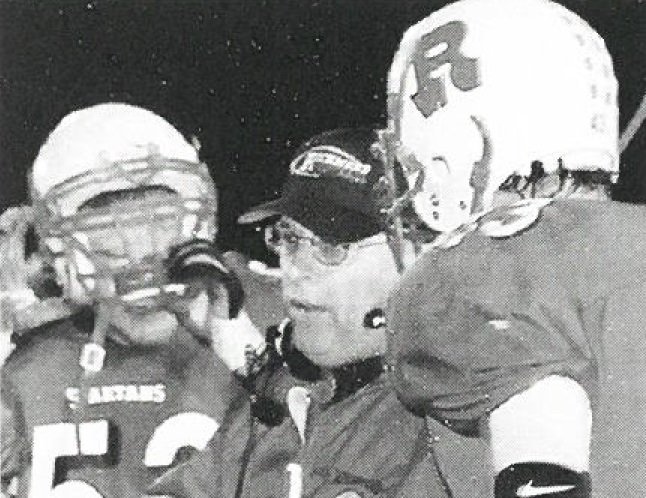
Rob Bowers got himself in trouble in eighth-grade science class for drawing football plays. Decades later, he drew enough of them — and taught them well enough — to earn a place in the Missouri Sports Hall of Fame.
That moment in the classroom was hardly the beginning of Bowers’ love for the game. Some of his fondest early memories came even earlier, when his mother would drop him off at the field so he could watch high school football practice as a sixth-grader, sneaking under the bleachers to get a closer look.
“My interest in football is the result of riding with my dad on the school bus when he drove the Penney High School Hornets to games,” Bowers said. “After watching games with dad, I started having my mom drop me off to watch high school practices from the bleachers.”
That fascination became a calling. By the time he retired in 2017, Bowers’ 37-year coaching career had reached the 200-victory mark, included a state championship, and shaped generations of young men. And that’s why the Missouri Sports Hall of Fame proudly inducted Bowers with the Class of 2026.
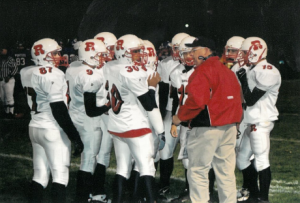
“When I began coaching, being inducted into a Hall of Fame was not on my radar,” Bowers said. “Even now, after I have been retired a few years, it is a surprise to me to be mentioned in the same context with these coaches and athletes. It is a huge honor.”
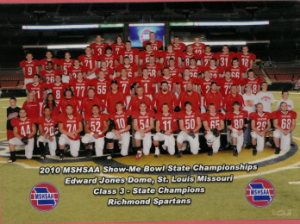
Bowers, who began coaching in 1981, led teams to seven conference championships, nine district titles, and seven state quarterfinals. The 2010 Richmond Spartans captured the Missouri Class 3 state championship, part of a stretch that included multiple trips to the state semifinals (2003, 2010, 2011).
He previously led four schools to winning years in their second season, as they had losing records the year before his arrival.
Long before the wins, Bowers was a standout player. A 1975 graduate of Penney High School, he earned all-conference honors as a two-way lineman and was named All-District and All-State. He went on to play at William Jewell College, beginning as a linebacker before spending two seasons at nose guard.
Coaching followed naturally. Bowers began as a graduate assistant at William Jewell, then served as an assistant at Plattsburg High School and Sam Houston State. His head coaching career included stops at Worth County, Albany, McDonald County, Cameron, and Richmond, where he served two stints and became the longest-tenured and winningest coach in program history.
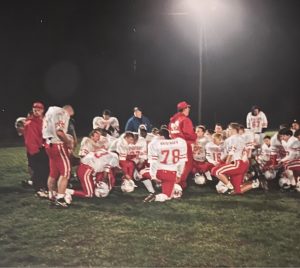
“Probably the three things that contributed the most to the success in my coaching career were striving to never be outworked and truly loving my players,” Bowers said. “If players see you working harder than anyone else, and know that you genuinely care for them as more than just football players, they will do things they didn’t know they were capable of.”
As his career progressed, his philosophy shifted.
“When I was young, coaching was admittedly all about me and winning,” Bowers said. “Once we started a family, I started to realize how much a person in charge could affect a student. Winning was always important, but it took a back seat to doing what was best for the players.”
That approach left a lasting imprint. Nine of Bowers’ former players went on to become football coaches themselves.
At the heart of it all was family.
“My wife, Kerra, is a partner in everything I do,” Bowers said. “She was a sounding board, an encourager, a prayer warrior, and a loyal supporter through all the hard times, as well as the good times.”
Bowers coached all three of his sons — Colby, Brock, and McCauley — at Richmond. Each earned First Team All-State while navigating the unique challenges of growing up and playing as the coach’s sons.
Faith remained central throughout Bowers’ journey.
“Ultimately, I wanted my players to become young men who would become great husbands, great fathers, and productive leaders in their community,” he said.
The honors followed, including induction into the Missouri Football Coaches Association Hall of Fame in 2011, the GKCFCA Hall of Fame in 2017, the Richmond High School Hall of Fame in 2021, and recognition as part of the 1980 William Jewell coaching staff inducted into that school’s Hall of Fame.
Yet for a coach whose journey once paused over a sheet of science-class paper filled with drawn-up plays, the meaning remains simple.
“It certainly is nice to feel all the years of hard work and effort has been appreciated to this degree,” Bowers said.