Inductees
Davin Winkley
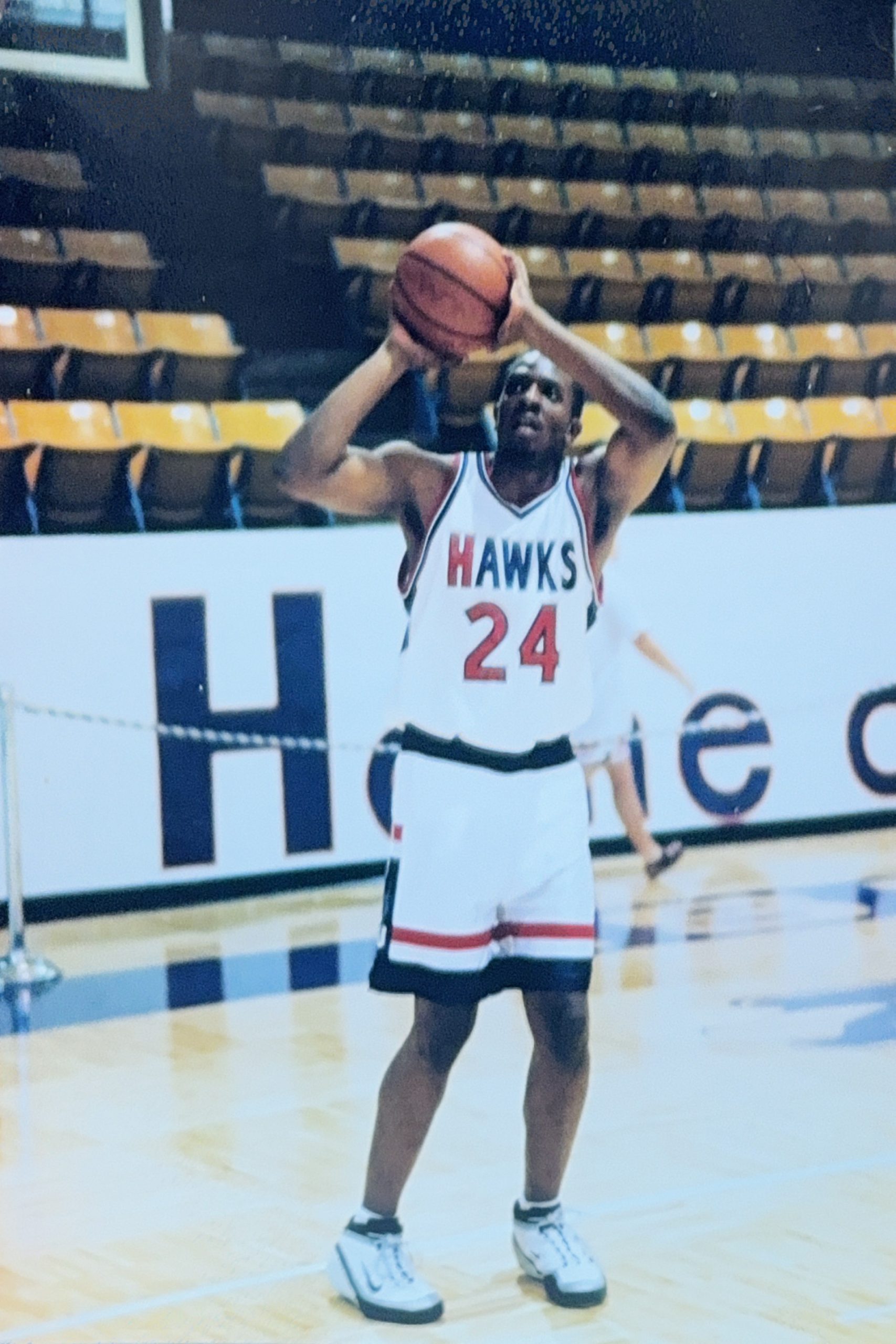

Davin Winkley didn’t know early on basketball would take him places, from near the top of NCAA Division II to across the Atlantic to play professionally.
“Some of my earliest memories are from those early league games where teams would press us the entire game and run up the score,” he said. “I don’t think we won a single game. I also remember being pretty uncoordinated and constantly tripping over myself, just trying to figure it all out.”
Figure it out he did.
After a standout career at Hickman Mills High School, Winkley became one of the top scorers in Rockhurst University history, leading the Hawks to the 2002 NCAA Division II Sweet 16 before starting a professional career in France.
Thus, the Missouri Sports Hall of Fame proudly inducted Winkley with the Class of 2025.
“So many people have influenced who I am, both personally and professionally,” he said. “I’ve always believed that honors like this aren’t individual awards — they’re a reflection of the incredible people who have supported, guided, and challenged me throughout my life. I’ve been fortunate to be surrounded by great coaches, teammates, friends, and family who all played a part in my journey.”
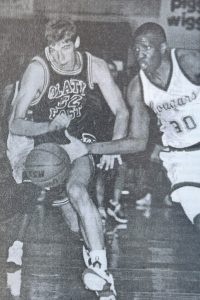
Winkley was an all-state performer during his senior season at Hickman Mills, leading the team to the state quarterfinals. He earned a start his freshman season after some upperclassmen missed a Saturday morning practice, and steadily improved during his sophomore and junior seasons.
After his junior season, he joined an AAU team that traveled the country playing high-level competition.
“We held our own both individually and as a team,” he said. “That was a big eye-opener for me.”
That was the first time Winkley even considered being able to play after high school, he said.
“From Coach Miller and my time at Hickman Mills, I took a lot of toughness,” he said. “He used football hitting pads during practice to push us around and teach us to hold our ground. He really emphasized playing strong, as well as angles and footwork — lessons that became huge for me in college, especially going up against bigger opponents.”
Winkley got multiple college offers, including from Truman State, William Jewell and Northwest Missouri State. Truman and Northwest both offered him the chance to play basketball and football.
“I ultimately chose Rockhurst because I liked what they were building,” he said. “They were transitioning from the NAIA to the NCAA, and I wanted to be part of that. Rockhurst was also the first school to offer me a scholarship — before anyone else did — and that meant a lot. Some people doubted whether I could play at that level, so their belief in me from the start really stuck with me.”
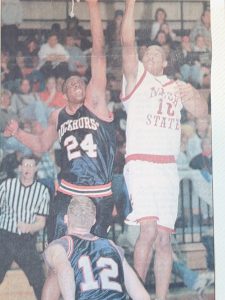
Winkley finished his career with 2,063 points, which is tied with Doug Wemhoff for the second-most in the 114-season history of the school. Winkley also ranks fifth in rebounding with 939. His scoring average of 18.26 points a game ranks third.
“The environment at Rockhurst was a big part of my success. Our coaches made sure we had 24/7 access to the gym, so there were no barriers to putting in extra work,” he said. “They also demanded effort and excellence but gave us the freedom to be as good as we wanted to be. I never felt held back — my success or failure was completely in my hands.”
Winkley helped lead the 2001-2002 Hawks to a 24-6 record and a berth in the DII Sweet 16.
“I had a good feeling about that season toward the end of the year before. Our core group was still pretty new, but by the end of that season we started to really click,” he said. “Everyone was competitive — we’d stay after practice for hours playing one-on-one or shooting games.”
Winkley said his teammates at Rockhurst were the perfect mix of encouraging and demanding, which created an environment that led to success.
“I learned a lot from the upperclassmen by watching how they carried themselves and approached practice,” he said. “Later, I trained closely with a teammate, Cody Mottesheard. One summer, we worked out in the mornings, went to class, then hit another workout before playing in summer league and night hoops games. My game really took off after that summer. As the years went on, more great players joined the program — transfers and freshmen who pushed me to be better every day. That kind of competitive, supportive environment made all the difference.”