Inductees
Willow Springs Cross Country 1994-1999 Era


Long before the banners went up inside the Willow Springs High School gym, there was simply a young coach, a tight-knit group of runners and a belief that hard work could close any gap.
From 1994 through 1999, in the small Howell County community of Willow Springs, the Bears and Lady Bears cross country programs authored one of the most sustained stretches in Missouri state history. Under head coach Marvin Hatley, those teams did not just compete. They reset the standard.
And that’s why the Missouri Sports Hall of Fame is proud to induct the Willow Springs High School Boys and Girls Cross Country teams of 1994-1999 with the Class of 2026.
Assigned to Class 1-2 in the first two seasons and later to Class 2, Willow Springs combined for nine Top 12 state finishes across that six-year window. Three of those trips ended with state championships.
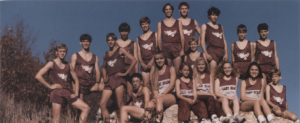
The boys program built steadily before breaking through. After finishing 11th and fifth in the mid-1990s and claiming state runner-up honors in 1996, the Bears captured back-to-back state championships in 1997 and 1998. Scott Smith claimed individual state titles in both of those championship seasons, cementing his place among Missouri’s elite distance runners. The Bears also won four district championships during that six-year span.
On the girls side, history arrived first. The 1996 Lady Bears delivered the first state championship of any kind in school history. They followed with a third-place finish in 1998 and fifth in 1999, establishing Willow Springs as a consistent presence on the awards podium.
Hatley, fresh out of college when he arrived, inherited more than talent. He inherited belief.
“In spite of a novice, yeah, I was a kid just out of college,” Hatley said. “Coming out of Joe Bill Dixon’s cross country program from West Plains in the ’80s, I went to college, ran in college just for a year, and then focused on my studies. Then I got the opportunity to go to Willow Springs, which was obviously just a little bit north of West Plains where I lived and moved to that community, just really fell in love with the school and the kids.”

“I just said, ‘Hey, you know, we’re going to work harder than any of the teams in the state, and if we do that, the likelihood of us winning a state championship is high,’” Hatley said. “And so we kind of went on that motto for a while and determined we were going to outwork everybody else.”
Some of the boys teams logged more than 100 miles per week. The girls pushed beyond 70.
“Coach Hatley came in with a win-now attitude, and showed us how to do that through consistent hard work,” said Chris Waggoner, a 1994 senior and current coach. “Also, to have five or more runners willing to do that every year made it even more special.”
That mindset sustained the run. Early teams that did not win laid the foundation.
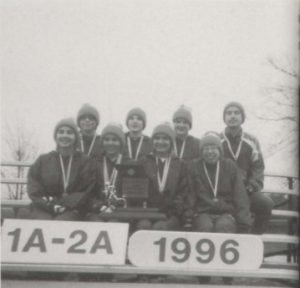
“You just had some stick-to-it-ness,” Hatley said. “Maybe they were in the hundreds in the state meet the year before, but then they bumped all the way up into the teens the following year. Just the continual improvement of the younger generations and feeding off of the previous”
“We took a school that had not won a state championship and, you know, coming out with a desire to work hard and do something that had never been done there before,” Hatley said.
Nearly three decades later, what stands out most to him is not the hard work, but the unity.

“They were the type of young men and women that, when they all united together, they were a team for one cause,” Hatley said. “I was very blessed having been part of that because I went on to coach other teams, even at higher levels, that weren’t as cohesive as those groups.”
Families rallied. Teammates spent time together off the course as much as on it. In a small-school setting, the success belonged to the entire community.
When you are living through an era, Hatley said, you rarely grasp its magnitude.
“It’s just neat to know that there’s some banners hanging in a school gym that have never even been touched,” Hatley said. “They live as an example of what can be done if you’re really willing to commit to it.”
In Willow Springs, commitment became culture. Culture became championships. And championships became history — the kind now preserved in the Missouri Sports Hall of Fame.