Inductees
Bill Barton
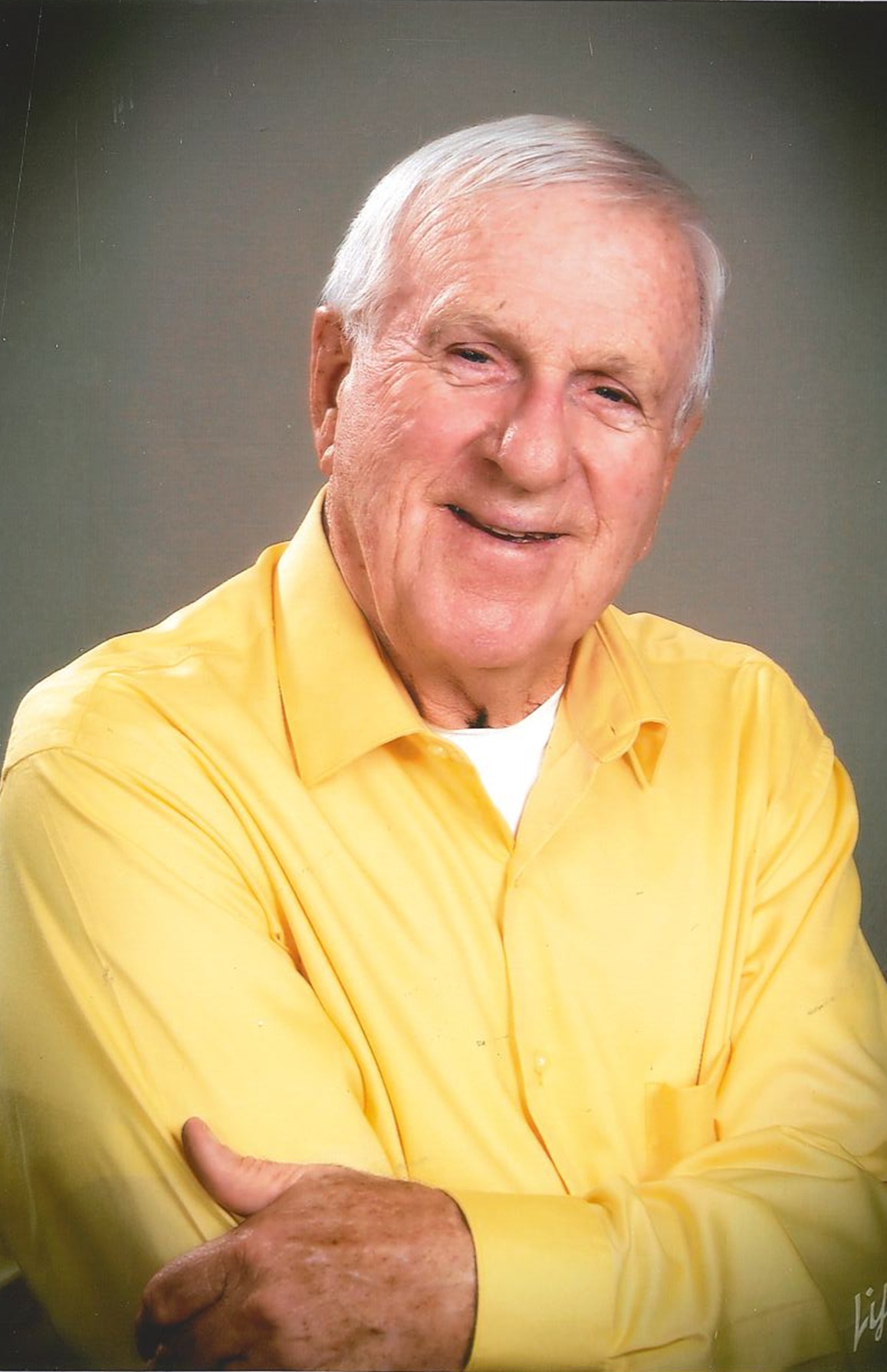
Bill Barton’s résumé spans decades, generations and nearly every corner of Missouri basketball.
Over 35 seasons at State Fair Community College in Sedalia, Barton guided the Roadrunners to 625 wins, Region 16 titles and two NJCAA Tournament appearances. He sent players to the highest levels of college basketball, built a program from the ground up and did it all inside a modest agriculture building that seated fewer than 1,000 fans.
That’s why the Missouri Sports Hall of Fame proudly inducted Bill Barton with the Class of 2026.
A 1955 graduate of Crane High School in southwest Missouri, Barton’s path to the Hall of Fame was anything but direct. After high school, he played two seasons at Southwest Baptist University and later attended Northeast Oklahoma State University before being drafted into the Army, where he served seven years.
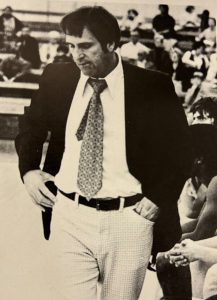
Coaching came next. Barton spent six years coaching at Crane High School and two at Skyline, guiding teams to the Class S Final Four in 1969 and 1970, including a state runner-up finish in 1969.
In 1970, Barton took over the basketball program at State Fair, which at the time was just two years old. What followed was a 35-year run that helped define junior college basketball in Missouri.
“Well, no, those things never really entered my mind at the time,” Barton said when asked if he ever envisioned Hall of Fame recognition. “I never thought much about the Hall of Fame in those days. I was just trying to build a program.”
Barton coached the Roadrunners from 1970 to 2005, compiling a 625-497 record. His teams earned NJCAA Tournament appearances in 1972 and 1976, seasons in which he was also named Region 16 Coach of the Year.
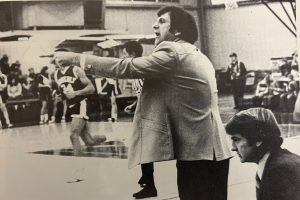
Facilities were modest. For years, State Fair played home games in an agriculture building that seated roughly 700 to 900 fans on big nights. Recruiting was restrictive, too, with limits on out-of-state players.
“We played in the ag building there for probably, oh gosh, 20 years,” Barton said. “But we held our own with the teams that were established.”
Relationships became a competitive edge. Barton leaned on connections with high school coaches and Division I programs.
“The better you know people, the better off you are,” Barton said. “I was in Kansas City a lot on Friday nights, scouting kids.”
Barton often points to players such as Tyrone Davis and Aaron Collier, who played at Kansas State, and Tim West, who played at Nebraska, as examples of what the program was able to build.
Four of his players signed with Jack Hartman’s Kansas State Wildcats, including Carthage’s Joe Wright. Two others signed with Norm Stewart’s Missouri Tigers. Barton was inducted into the Missouri Basketball Hall of Fame in 1991 and later into the NJCAA Men’s Basketball Coaches Association Hall of Fame in 2010.
Yet, Barton points less to banners and more to people.
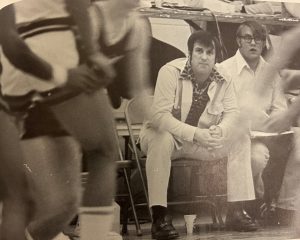
“First of all, I love the kids that went on and did good,” Barton said. “I felt like I had a lot to do with them being able to move on, have a good career somewhere else, get a college degree.”
He demanded accountability. That extended beyond the court and into the classroom, sometimes quite literally.
“We had trouble around town getting the kids to class because they were a mile and a half away,” Barton said. “I got up a lot of mornings at 7 o’clock to get them to class for an 8 o’clock class.”
Barton believes those efforts helped establish a foundation that still benefits the program today.
“My contribution was the basketball,” he said. “You feel like you had a little to do with maybe the reputation being what it is today.”
Family was the constant thread throughout Barton’s coaching life. His wife, Janice, was by his side for every step of the journey. She became an extension of the program, hosting study halls, delivering snacks and mentoring players. She passed away 2 ½ years after battling Parkinson’s disease.
“You’ve got to have some person like that,” Barton said. “A good family that understands it, and she understood it.”
Together, they raised four daughters — Deanna, Sonya and twins Kendra and Gwenda. All played high school basketball and later built careers in education, with the twins serving as school principals.
The relationships are what endure.
“Other than the kids that I coached,” he said, “the ones that I feel like I had a lot to do with their success — that’s what matters.”